Friday, March 8, 2013

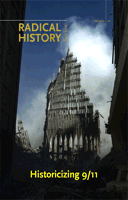
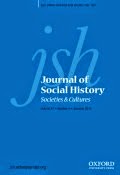
My art work appears in Harvests of New Millennium journal (2013)

VOLUME 6 NUMBER 1 JAN. 2013

Friday, March 1, 2013

My Forthcoming Publications


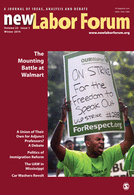
------"Justice for Contingent College Teachers: Solidarity and the Need for Independent Labor Unions," New Labor Forum (Winter 2013.)


-----“Spy Dispatch: Oakland, CA,” in Todd Comer and Nathan Crook, eds., From Wall Street to Main Street: The Regional Politics of Occupying (2013).

-----“Why Everyone is Called a Terrorist: Marginalizing Protest in the U.S.,” Radical Criminology (2013).


-----“Schools for Justice in the United States,” in Ira Bogotch and Carolyn Shields, eds., International Handbook of Educational Leadership and Social (In)Justice (Springer, 2013).


------“A White Man in the Colored Bronx,” in Teresa A. Booker, ed., Race and Urban Communities: An Interdisciplinary Approach (University of Akron Press, 2013).


-----“From Surveillance to Torture: The Evolution of U.S. Practice during the War on Terror”(Security Journal,2014).


-----"Keeking Track Blues" (painting), Studio Visit book (2013).


------"Twisted Strings" and "Why Supress Difference?" (poetry) in book Anthology (Diversion Press, 2013).


Thursday, January 24, 2013

review of my Surveillance book in Choice journal (Jan. 2013)

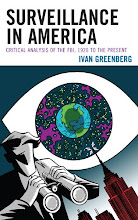
CHOICE (Jan. 2013) review of Surveillance in America: Critical Analysis of the FBI, 1920 to the Present (Lexington Books, 2012) In this tightly argued and impressively researched monograph, Greenberg, the author of the well-received Dangers of Dissent (2010), extends his earlier analysis of the threat expansive surveillance operations pose to civil liberties. Based on research in FBI records released in response to (his own and other) Freedom of Information Act requests and extensive reading of the relevant secondary literature, this book surveys FBI surveillance operations since 1920. Greenberg recounts in detail how FBI investigations extended beyond legitimate security threats to encompass radical and labor union activists, historians and prominent writers, reporters, and social justice proponents, and, in an interesting chapter, relates FBI Associate Director W. Mark Felt's questionable actions in the Watergate affair. In addition, the author pinpoints the fundamental shift in the conduct of such operations from the secret use of recognizably illegal or extralegal investigative procedures during the post-World War I through the Cold War eras to their legalization through permissive, wide-ranging legislation enacted in the 1990s, 2001, and 2008. Greenberg's sobering account offers a welcome perspective for assessing the current debate over the proper balance between security and liberty interests in the wake of the 9/11 terrorist attacks. Summing Up: Highly recommended. All levels/libraries.

Tuesday, January 8, 2013

Lexington Books History Catalog 2013

LEX History Catalog 2013
(See p. 7)

Saturday, December 1, 2012

"Drawings with Stamps" (2012)

Friday, November 30, 2012

"Drawing Surveillance"

I just finished writing the text for a historical graphic novel entitled: Drawing Surveillance: Graphic Stories from the Holy Bible to the War on Terror.

Friday, August 10, 2012

Declassifying Government And Undermining A Culture Of Insecurity


Tuesday, June 26, 2012

Surveillance in America: The origin of a book cover

Surveillance in America: The origin of a book cover

Thursday, June 21, 2012

Presenting a talk at the HOPE 9 Conference, New York city, July 13-15, 2012. "Declassifying Government and Undermining a Culture of Insecurity"

It is critically important to obtain and publicize declassified government intelligence documents in order to demystify official narratives of domestic security. Over the last decade, Ivan received about 60 FBI files by using the Freedom of Information Act and by initiating a lawsuit, while writing two books on civil liberties and surveillance. He will discuss his experiences getting government documents and show how new information about surveillance practices can help the American people make better informed judgments about how surveillance systems are developed and deployed. Is it possible for popular democratic participation in the operation of surveillance systems? Whose security is really at stake? How can we counter the creation of a top-down, official “culture of insecurity?”

Sunday, April 22, 2012

my new book is forthcoming in June 2012 -- "Surveillance in America: Critical Analysis of the FBI, 1920 to the Present" (Lexington Books)